Electrical work is the part of a building you cannot inspect once it is closed up. That is exactly why it should be the part with the most paperwork behind it: a load schedule that was calculated rather than guessed, containment that was installed rather than improvised, and test certificates that someone can actually read.
We work to BS 7671 practice and DEWA requirements, label every circuit at the board, and hand over a schedule that matches what is physically installed. If a wall is going to be closed, it gets photographed first, so the next person has a chance.
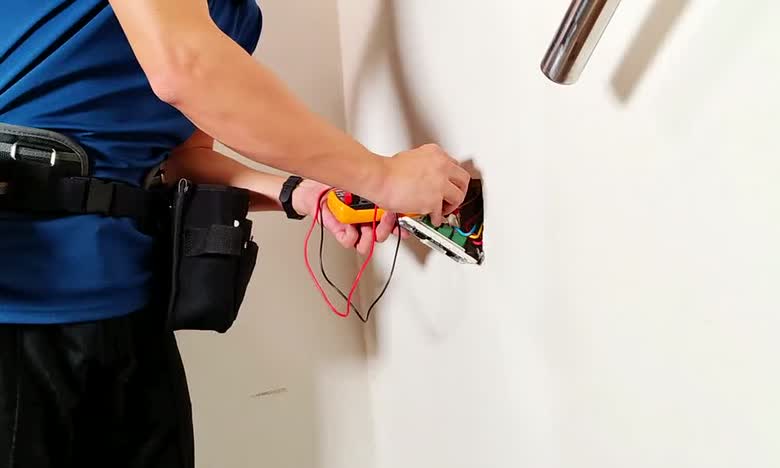
Anything that touches the incoming supply, the main board or the meter runs through DEWA, and the submission is as much part of the job as the cable. We prepare drawings and load calculations, handle the application and the inspection, and schedule the work so the shutdown happens once rather than three times. For villa and apartment rewires we also deal with building management, which is usually the thing that actually delays a start date.
The same team and the same standards across every sector we work in. What changes is the programme, the access and the approvals — not the quality of the work.
Calculated loads, correctly sized DBs and final circuits, with RCBO protection and a labelled schedule that matches what is in the wall.
Full and partial rewires of villas, apartments and offices, phased so the property stays usable, with containment installed properly rather than cables pushed loose through voids.
Circuit design, dimming, scene setting and sensors, with lighting levels planned against what the room is for instead of a grid of identical downlights.
Tray, basket, conduit and trunking installed to a layout, with capacity left for the next change rather than filled to the brim on day one.
Full inspection and test on completion, with certificates issued and handed over — the document building management will ask you for.
Tracing nuisance tripping, overheating connections and dead circuits to the actual cause, rather than replacing the board and hoping.
A few jobs that show how we approach this trade.
A 1990s board with no RCBOs replaced after a proper load schedule. New DB, new circuits with correct containment, lighting and controls, and test certificates building management accepted first time.
Kitchen power, extract interlocks and front-of-house lighting on a fixed opening date, with the municipality inspection booked and passed before handover.
Three-phase distribution sized to the racking and machinery actually going in, with spare ways left at the board for the second phase the client already knew was coming.
Yes — drawings, load calculations, submission, inspection and sign-off. It is part of the job, not something we hand back to you halfway through.
Yes, phased so that power and cooling are never off overnight. We agree the sequence with you before starting, including which days are worst.
Always. Full inspection and test results on completion, issued as proper certificates, which is what building management and any future buyer will ask for.
It can be, and it is always worth finding out why rather than resetting it. We trace the actual cause, which is usually a specific circuit, a damaged cable or a load that was never designed for.
Often yes, if the board has capacity and is in sound condition. We will tell you honestly which of those is true rather than defaulting to a full replacement.
Yes — dimming, scene setting, sensors and smart switching, wired so that the system can be serviced later by somebody other than us.