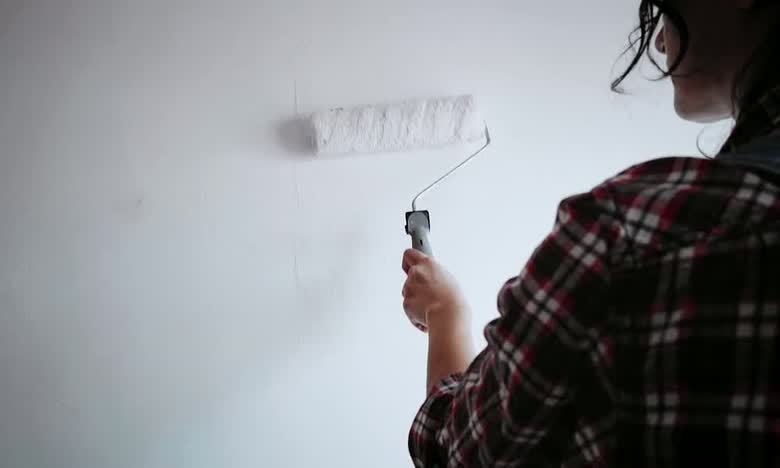
Preparation is the job. The paint itself is the last and least interesting part of it. Filling, sanding, stabilising and priming are what decide whether you are looking at a clean wall in three years or a map of hairline cracks and patch marks catching the afternoon light.
We quote the preparation openly as its own line rather than burying it in a rate, because it is where the time goes and where the difference shows. Two days of filling and sanding before a brush is opened is normal on a repaint, and we would rather lose the job than skip it.
A facade in Dubai takes UV levels and a temperature range that will chalk and fade an ordinary exterior emulsion within a couple of seasons, and coastal properties add salt to the problem. Bathrooms and kitchens here run humid enough that an ordinary interior paint grows mould at the ceiling line. We specify UV-stable elastomeric systems outside and anti-fungal coatings in wet areas as standard, not as an upgrade.
The same team and the same standards across every sector we work in. What changes is the programme, the access and the approvals — not the quality of the work.
Filling, sanding, stabilising and priming. Loose and friable material taken back to something sound, rather than sealed over and left to fail underneath.
Emulsion, satin and eggshell systems over fully prepared surfaces. One primer and two finish coats as standard, with a third where the colour needs it.
UV and weather resistant systems including crack repair, render patching and elastomeric facade coatings, with access equipment included in the price.
Venetian plaster, microcement, textured and metallic effects, always with a sample panel approved on site before we proceed.
Anti-fungal and anti-carbonation systems, intumescent and steel protection, and floor and plant-room coatings where they are specified.
Phased room by room with low-odour products, dust sheeting and a daily clean-down, with evening and weekend working where the space has to stay in use.
A few jobs that show how we approach this trade.
Two days of filling, sanding and priming before any colour went on. Two years later there are no cracks at the junctions and the line where the wall meets the ceiling is still straight.
Crack repair and an elastomeric system over 420 sqm of sun-facing elevation that had chalked badly. Colour matched to the original so the compound stayed consistent.
Eleven floors repainted over six weekends with the business trading throughout, using low-odour products and a Monday-morning handover of each completed floor.
One primer plus two finish coats as standard. Dark colours and new plaster usually need a third, and we say so at quotation rather than after.
Yes — phased room by room with low-odour products and evening or weekend working where the space has to stay in use.
Yes, including access equipment, crack repair, waterproof render coats and elastomeric facade systems.
Venetian plaster, microcement, textured and metallic finishes and wallpaper hanging, all with a sample panel approved before we proceed.
Almost always an ordinary emulsion in a room that runs humid for hours a day. The fix is an anti-fungal coating system and, usually, dealing with why the extract is not clearing the moisture.
We cut them out, fill and stabilise them properly. Painting over a live crack hides it for a few months and tells you nothing about why it is there.